Thursday, 30 October 2014

It's a bracelet... It's a watch... No, It's a Charger!

Smart watches and fitness bands are passé. It is time for the QBracelet. The QBracelet is a portable charger that you can wear on your wrist and that will charge your iPhone or Android device.

While we have had a lot of portable charges, what makes the QBracelet truly unique is that it is a portable charger that looks like a pretty piece of jewellery. When you unfold the bracelet, you find a hidden charging connector- a micro USB connector for Android devices and a Lightning connector for the iPhone.


Q Designs, the company that has conceptualized the QBracelet, claims that the Lithium-ion battery of the QBracelet will charge your device upto 60%. The bracelet takes 90 minutes to charge and lasts 30 days on standby.

Tuesday, 21 October 2014

We tested Apple Pay in the real world and this is our report

Apple released iOS 8.1 yesterday and with that came the opportunity for us to use Apple pay on iPhone 6 and 6 Plus.

We were very excited to try out Apple's new Apple Pay. But first we had to get our Apple 6 Plus ready for the NFC-powered mobile payment. Here is how you can go about it:

1. Open the Passbook app
2. Tap the 'Add' button
3. Select the Credit/Debit Card menu (this has been introduced in iOS 8.1)
4. Fill the form by entering your card's number, expiration date and security code. Optionally you can also scan the details of your card with the phone's camera.

That's it, you're set!

When we visited a business outlet that accepts Apple's Pay's NFC payment, we had the opportunity to see Apple Pay in action. At the billing counter, when everything has been rung up, you have to hold your thumb (or any other finger that you have registered on your phone) to Touch ID and tap it against the part of the payment terminal with the Apple Pay symbol.

This entire process at the checkout counter takes a few short seconds. We really enjoyed the process. Let us know about your experience in the comments.

Thursday, 16 October 2014

Find a parking spot in Dubai on your smartphone.

If you drive around in Dubai, you might be a little frustrated with traffic tailbacks and the lack of parking space.

The Road and Transport Authority Dubai (RTA) have taken the initiative to solve your traffic and parking problems with a little help from technology.

The RTA will release an array of apps at Gitex 2014 that will give drivers and motorists live traffic updates across Dubai and also help them find places where they can safely park their vehicles. Visitors at Gitex had the opportunity to see a live demonstration of the apps.

“The app offers users real-time, accurate and direct information about road conditions in Dubai and, accordingly, enables them to pre-plan their trips, use alternative roads and avoid congested routes. The application is also fitted with a prompt reporting feature that provides real-time updates about traffic conditions, traffic jams, and accidents, among other surprises, so that users can avoid these,” said Mattar Al Tayer, Chairman of the Board and Executive Director of RTA.

The very popular Smart Parking app by RTA Dubai has also been updated with a parking availability feature that will show users available parking space on their cell phones. Currently the service is in beta phase and only covers a section of Shaikh Zayed Road in the direction towards Abu Dhabi.

“We are adding features that will come in handy for motorists when looking for vacant parking spaces in busy areas. We have started the service at all RTA’s parking buildings and by the end of the year we will have the service at some parking lots as well,” said Adel Marzouqi, Director of Parking at RTA’s Traffic and Roads Agency.

His Highness Shaikh Mohammad Bin Rashid Al Maktoum, Vice-President and Prime Minister of the UAE and Ruler of Dubai launched the Smart Dubai initiative early this year. The Smart Parking app is an brainchild of this initiative. This initiative aims to make Dubai the smarted city in the world by providing live service 24/7 to users on their mobile phones.

Wednesday, 1 October 2014

Facebook Launched Atlas to Compete with Google's DoubleClick

Facebook has officially announced its ad planner, the new Atlas.

Facebook/Atlas promises "people-based marketing" and measurement across devices and even offline.

On its blogpost Facebook/Atlas Solutions wrote:

Atlas delivers people-based marketing, helping marketers reach real people across devices, platforms and publishers. By doing this, marketers can easily solve the cross-device problem through targeting, serving and measuring across devices. And, Atlas can now connect online campaigns to actual offline sales, ultimately proving the real impact that digital campaigns have in driving incremental reach and new sales.

Atlas has been rebuilt on an entirely new code base, with a user interface designed for today’s busy media planners and traffickers. Targeting and measurement capabilities are built-in, and cross-device marketing is easy with new ways of evaluating media performance centered on people for reporting and measurement. This valuable data can lead to better optimization decisions to make your media budget even more effective.

Atlas has been described as an ad-serving platform that enables media buyers and advertisers to "create, buy, measure and optimize digital campaigns... across devices and the entire internet, at massive scale - something that's never been available before."

Google's DoubleClick that currently is the leader in display ad serving is its main competitor.  Atlas takes its offering one step further by offering audience-based targeting and shunning cookies. It also includes cross-device and offline measurement.

Atlas has also partnered with Kenshoo, Marin Software, Social.com, Jivox, Celtra, Medialets, AdMarvel/OperaMediaworks, InMobi, Millennial Media and several others.

Facebook bought Atlas from Microsoft for an estimated $100 million in 2013. Microsoft had bought Atlas for $6 billion in 2007.

Friday, 19 September 2014

A new mid-range Stylus-enabled phone from LG: G3 Stylus


LG announced a new phone, the G3 Stylus, a variant of its flagship G3 smartphone with only a little difference: it comes with a stylus.

The device is 5.5inches with a 13mp camera, 1GB RAM and 8GB memory. It will run Android KitKat.

The G3 Stylus will be optimized for 3G markets and will be available in single-sim and dual-sim option. It will come in black, gold and white.

The LG G3 was the first smartphone to boast a Quad HD display. The G3 Stylus will have the same screen size as the G3 but it features a 960-by-540 resolution which is not as awesome as that of the G3. It is also expected to have mid-range pricing.

The G3 Stylus will be available in Brazil this week and soon in other countries. Would you go for this phone?

Tuesday, 16 September 2014

Rise of the Phablets: iPhone 6 Plus Sold Out


The new iPhone 6 and 6 Plus are already a hit. Although the phones have not been shipped yet, the 5.5 inch iPhone 6 Plus is sold out, well ahead of the 4.7 inch iPhone 6.

The verdict is clear: the big screen is a hit.

There is definitely a chance that there were more iPhone 6 phones on offer than the 6 Plus. But early buzz on the internet shows equal interest in the Plus model.

Large-screen phones, often called Phablets (Phone+Tablets) have become wildly popular in the last few years. Their demand has been steadily growing. Buyers look for a Phablet to negate the need for a standalone tablet. Apple's closest Android rivals are Samsung, HTC and LG. Their flagships phones are popular in the phablet marketplace.

It was natural for Apple to respond with a bigger size phone. We are slowly getting to a world where people prefer screens larger than 4 inches but still want their phones to not weight as much as tablets and easily manageable with one hand.

The Phablet is here to stay. It should come as no surprise if you see more iPhone 6 Plus phones on the street than the smaller iPhone 6.

Sunday, 14 September 2014

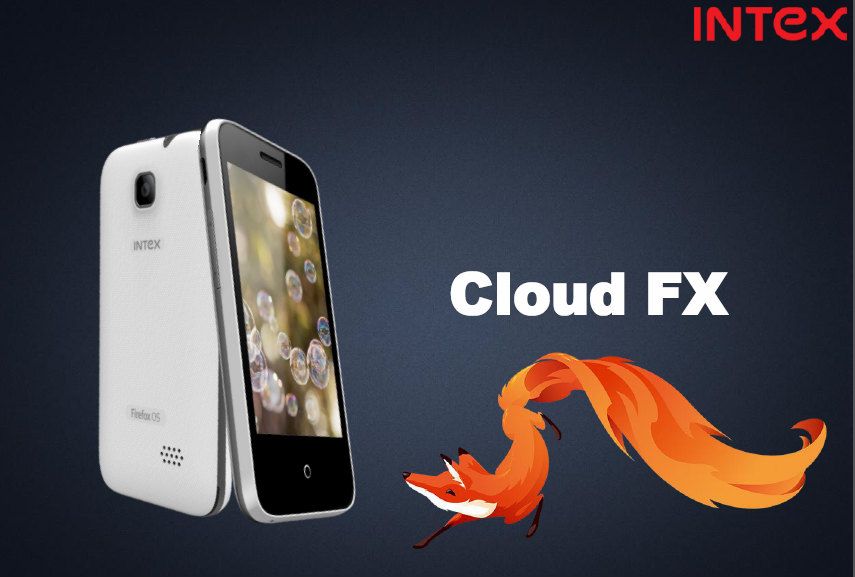
Cloud FX with Mozilla OS selling for $33 in India

Mozilla launched its inaugural smartphone with the Mozilla Firefox OS in late August. It was launched in India and it cost only $33.

It is retailing as the Intex Cloud FX and is a partnership between Mozilla and Intex Technologies. The phone has 4GB memory capacity and Bluetooth. It supports Hindi and Tamil and is available only on snapdeal.com.

Intex director of marketing Keshav Bensal said, "With the launch of Intex Cloud FX, we aim to enable the masses to get smartphone experience at the cost of a feature phone."

India has the third-highest number of smartphone sales on the planet after U.S. and China. This cost effective phone model is expected to accelerate India's position to the top of the global smartphone market.

Mozilla is not the only one that is aspiring to get a key share of the lower-end of the Indian smartphone market. Google is gearing to entering the space too with its Android One program that will bring an Android device in India for less than $100. This mobile phone will have a 4.5 inch screen, dual-SIM, FM radio and Android OS.